
Does your Puppy Struggle In Group Classes? Here’s What to Do
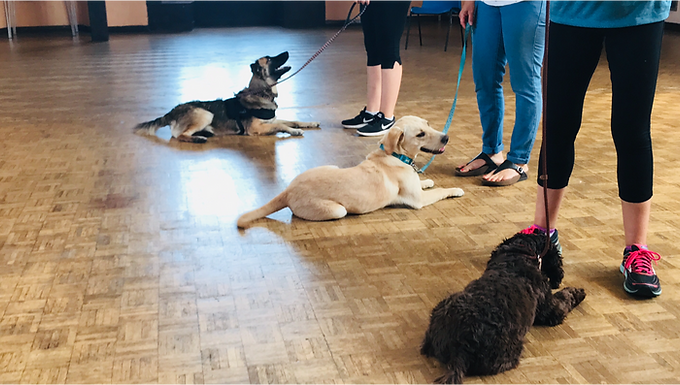
Puppy classes can be brilliant for learning, social development and building early life skills, but not every puppy finds a group environment easy straight away. Some puppies become overexcited, distracted, anxious or frustrated when they are around other dogs, new people and a busy space.
If your puppy struggles in a group class, it does not mean they are badly behaved or that training is not working. It usually means they need the right support, the right pace and a class environment that gives them room to think.
Why Some Puppies Find Classes Difficult
Puppies are still learning how to process the world around them. A village hall with new smells, other (equally energetic!) puppies and unfamiliar people can feel like a lot, especially during the early weeks of development.
Some puppies may bark, pull, jump around, hide behind their owner or find it hard to focus. Others may look confident but become so excited that they cannot listen or settle. These behaviours are often signs that your puppy is finding the situation challenging, rather than being deliberately difficult.
This is where the structure of the class matters. A large, noisy group can make it harder for puppies to concentrate, especially if they need a little more guidance.
Choose A Class With Enough Individual Support
At Canine Kids, we keep our puppy classes small, with a maximum of five puppies per course and two experienced trainers present. This means we can notice what is happening with each puppy, rather than expecting every dog to learn in exactly the same way.
Some puppies need more space; some need shorter exercises. Some need help staying calm before they can practise a new skill. Others need their owner to understand what their body language is showing. Because our classes are small, we can adapt to the support rather than letting puppies become overwhelmed.
This is especially helpful for owners looking for Surrey one to one classes or one-to-one puppy training in Surrey, but who would still like their puppy to benefit from carefully managed group learning.
Not Forcing Your Puppy To ‘Get Used To It’
A common mistake is assuming a puppy should simply push through the situation. If a puppy is overwhelmed, forcing them to stay close to other dogs or continue practising can make things harder.
Instead, we focus on helping puppies learn at a pace they can cope with. That might mean creating distance between other dogs, using food and play thoughtfully, allowing breaks, or helping them watch the room calmly before joining in again.
When One-To-One Puppy Training May Help
For some puppies, extra support outside class can be useful. Our one-to-one puppy training sessions allow us to look more closely at your puppy’s behaviour, your home routine and the specific areas you are finding difficult.
This can be especially helpful if your puppy is very nervous, highly excitable, struggling with handling, finding walks difficult or needing more individual coaching between classes.
The Right Support Can Make A Big Difference
If your puppy struggles in a group class, the most important thing is not to panic or compare them to other puppies. With patient, reward-based training and the right level of support, they can still make excellent progress.
At Canine Kids, we help owners understand what their puppy needs, so training feels calmer, clearer and more manageable for both of you.